HomeBlog Home
Tips & Advice

AI Home Search for Colorado Buyers: What Portals Miss

Brian Lee BurkeBrian Lee Burke
Jan 1, 2026 • 5 min read
Share to X
Share to Facebook
Share to Linkedin
Copy Link
AI Home Search for Colorado Buyers: What Portals Miss

An AI home search lets a Colorado buyer type a sentence ("a ranch under $650,000 in Centennial with a 3-car garage, no metro district, and a mountain view") and get a list back. The search on kennarealestate.com runs on a direct feed from REcolorado, the MLS Denver-area brokers use, so the list is the same one an agent sees, with saved searches and instant alerts on top. Portals run on delayed or scraped copies of that data and sell your contact information to the highest-bidding agent.

This guide explains how the tools work, what the national portals get wrong on Colorado homes, which filters matter at 5,280 feet, and how to combine an AI answer with a live agent so you do not overpay or miss the home.

What is an AI home search?

Three layers sit under any AI home search, and knowing which layer you are talking to explains most of the results you get:

  • The data. Listings come from an MLS. In the Denver metro that is REcolorado; in Colorado Springs it is Pikes Peak MLS; in Northern Colorado it is IRES. Every listing has 200 or more fields: price, beds, HOA fee, special taxing district, basement type, garage spaces, year built, water source, and the rest.
  • The filter. A conventional search turns checkboxes into a query against those fields. An AI search turns your sentence into the same query.
  • The ranking. The tool orders results by what you clicked, saved, and dismissed. This is the "learns what you want" part, and it is only as good as the data underneath it.

A tool with direct MLS data and a plain filter beats a tool with clever ranking on stale data every time, because the second one ranks homes that already sold.

Where do the listings on kennarealestate.com come from?

From REcolorado on a direct IDX feed, refreshed throughout the day. When a listing agent in Highlands Ranch changes a price or marks a home under contract, the change appears on our site on the next refresh, the same as in the agent's own MLS screen. Every home a Colorado broker has listed for sale is searchable at search every home for sale in Colorado, and each city has its own page, such as Denver homes for sale and Centennial homes for sale.

What the feed does not include: for-sale-by-owner homes not entered in the MLS, and "coming soon" listings in the window before they go active. A live agent sees both through the broker network, which is the first reason the search and the agent go together.

How do saved searches and alerts work?

  1. Run a search with your real criteria: city or ZIP, price cap, beds, baths, home type, garage, basement.
  2. Save it under a name that describes the geography ("Littleton ranch under $700k"), so the alert email tells you what it is.
  3. Choose instant, daily, or weekly alerts. In a market where the best-priced homes go under contract in the first 7 to 14 days, instant is the right setting.
  4. Click through from the alert; the listing page shows the HOA fee, the taxes, and the days on market from the MLS record, not a portal estimate.

Our personalized Colorado home search goes one step further: an agent builds the search with you, adds the fields the public form does not expose (special taxing district, lot size, view, sewer type), and watches it daily.

What do Zillow, Redfin, and Realtor.com miss on Colorado homes?

  • The value estimate. Zillow publishes its own median error rate: about 2% for homes on the market and about 7% for homes that are not. On a $600,000 Denver home, 7% is $42,000 in either direction. The estimate is a starting point, not a price; a comparable-sales analysis from an agent replaces it.
  • Metro district taxes. A new-build in Parker, Castle Rock, Erie, or Commerce City sits in a metro district that adds $1,500 to $4,000 a year to the property tax bill. Portals show last year's tax, which on a new home is the tax on dirt. Our metro district property tax guide shows how to find the real number.
  • Status lag. Portals show homes as active hours or days after they went under contract, and "off-market" homes that are not for sale at any price.
  • The HOA and the special assessment. The monthly fee is in the MLS; the $8,000 roof assessment the board voted last month is in the HOA documents, which only a contract gets you.
  • Who the lead goes to. The "Contact agent" button on a portal sends your name and phone to an agent who paid for that ZIP code, not to the listing agent.

Which AI real estate search portals exist in 2026?

The original national version of this post ranked three. Kept here for reference, in short form:

  • Deli. A conversational search that takes lifestyle criteria in plain language and matches them against live MLS data, for buyers and agents. Deli is a paid partner of this site, and you are free to use any provider.
  • Realtor.com. Natural-language search on top of its MLS-sourced listing feed.
  • Redfin. Conversational search and its own price estimate, with a brokerage behind it.

Test any portal with one Colorado question: "Is this home in a metro district, and what is the mill levy?" If the tool cannot answer, it does not have the field.

How do I phrase an AI home search for a Denver metro home?

Write the sentence the way you would say it to an agent, with numbers where you have them:

  • "Ranch-style home under $700,000 in Littleton or Centennial, finished basement, 2-car garage, built after 1990." Every term maps to an MLS field.
  • "Townhome in Lakewood or Arvada under $500,000 with an HOA fee under $300 and an attached garage." HOA fee is a field; the search filters it.
  • "Home with a mountain view in Golden, Morrison, or Castle Pines, under $1,200,000, on at least half an acre." View and lot size are fields.
  • Do not write: "quiet street," "good area," "up-and-coming." Those are not fields, so the AI guesses, and it guesses from other people's clicks, not from your criteria. Ask the agent instead; they drive the street.

Which search filters matter most in Colorado?

FilterWhy it matters on the Front Range
Attached vs. detachedREcolorado splits them; a paired home or townhome is "attached" and carries a party wall and an HOA.
Special taxing districtYes/No field. "Yes" means a metro district mill levy on top of county taxes.
HOA fee and what it covers$0 on most 1970s subdivisions; $250 to $600 a month on condos; check whether it includes water, trash, and exterior.
Year builtBefore 1970: clay sewer lines, galvanized plumbing. Before 1978: lead paint disclosure.
BasementFinished, unfinished, walkout, or crawlspace; a finished basement is 30% to 40% of the living space on a Denver ranch.
CoolingCentral air vs. evaporative cooler vs. none. Older Denver homes carry evaporative coolers; buyers from humid states are surprised.
Garage spacesHail. A covered car matters from April through September.
Water sourceOn acreage: municipal, well, or cistern. A well needs a permit from the Colorado Division of Water Resources.

The Denver home buyer verification checklist turns each of these into a yes-or-no check before you write an offer.

How do I use ChatGPT or Gemini answers without getting burned?

AI assistants answer Colorado real estate questions with confidence and with a training cutoff. Use them for the framework and verify the facts on the sources that update:

  • Prices and inventory. Verify on the MLS feed, not on a summary. Our Denver ZIP code market report updates from closed sales.
  • Taxes and districts. Verify on the county assessor's site (Arapahoe, Douglas, Jefferson, Denver, Adams, Boulder all publish parcel lookups).
  • Contract deadlines. Verify against the Colorado contract itself; the AI does not know your dates.
  • Loan programs. Verify with a lender; CHFA limits change every year. Start with a Colorado mortgage pre-approval.

A good use: paste a listing description into the assistant and ask "what questions should I ask about this home before I offer?" Then ask those questions of an agent who has walked the home.

Is my data sold when I search on a portal?

On the national portals, yes: your name, phone, and search history are the product, sold as leads to agents who pay by ZIP code. On kennarealestate.com, a saved search goes to the Kenna Real Estate Group and nowhere else. One group, one phone number, and a person who calls you back is the whole model. Our post on Zillow Pro agents in Colorado explains how the portal lead system works from the agent side.

How fast do well-priced Denver metro homes go under contract?

A home priced at the comparable sales, photographed well, and in move-in condition takes its first showings within 48 hours and goes under contract in 7 to 14 days. A home priced 5% above the comparables sits for 30 to 60 days and then takes a price cut. That is why the alert setting is "instant" and why the agent runs the comparables before you tour: the fast homes are the well-priced ones, and the well-priced ones are the ones worth moving on. The pre-offer home checks Denver buyers run take an hour and save a wasted inspection fee.

How an AI search plus a live agent works in practice

  1. You set the search on our home search with real numbers and instant alerts.
  2. An agent reviews it and adds the fields the form does not show: metro district, view, sewer, lot.
  3. You use an AI assistant to draft the questions for each home the alert sends.
  4. The agent answers them from the MLS record, the county assessor, and a walk-through, and runs the comparable sales before you write.
  5. You write the offer on the Colorado contract with deadlines that fit the home. Our making an offer on a Colorado home guide shows the dates.

Where to go next

Talk to the Kenna Real Estate Group

The Kenna Real Estate Group at Keller Williams DTC builds your search on direct REcolorado data, watches it daily, and answers the questions the portals cannot: metro district, HOA condition, sewer, and the real comparable sales. Call or text 303-955-4220. A live person answers. Not a robot, not a phone tree. Start now and search every home for sale in Colorado.

Homes for sale that match this post

Guides

Questions about any home in Colorado? Call or text 303-955-4220. A live person answers.

Quick answers

Is the home search on kennarealestate.com the same data agents see?

Yes. It runs on a direct IDX feed from REcolorado, the Denver-area MLS, refreshed throughout the day, so prices and statuses match the agent's MLS screen.

How accurate is a Zestimate on a Denver home?

Zillow's own published median error is about 2% for on-market homes and about 7% for off-market homes. On a $600,000 home that is a $12,000 to $42,000 swing, so use it as a starting point and price from comparable sales.

Do portals show metro district taxes on Colorado new builds?

No. They show last year's tax bill, which on a new home is the tax on an empty lot. Check the special taxing district field in the MLS and the county assessor's mill levy for the real number.

What alert frequency should I set for a Denver metro search?

Instant. Well-priced homes go under contract in 7 to 14 days, and daily digests arrive after the first showings are booked.

Can an AI search find 'quiet street' or 'good area' homes?

No. Those are not MLS fields, so the tool guesses from other people's clicks. Ask an agent who drives the street; use the AI for fields with numbers, such as price, HOA fee, lot size, and year built.

Who gets my information when I save a search on kennarealestate.com?

The Kenna Real Estate Group, and no one else. National portals sell your contact information as a lead to agents who pay for your ZIP code.

Which MLS covers Colorado Springs and Northern Colorado?

Pikes Peak MLS covers Colorado Springs and El Paso County; IRES covers Fort Collins, Loveland, Greeley, and Boulder County. REcolorado covers the Denver metro and most of the Front Range.
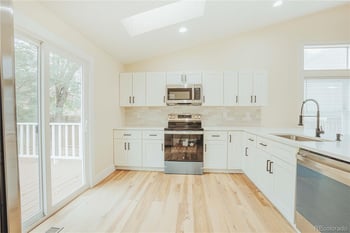
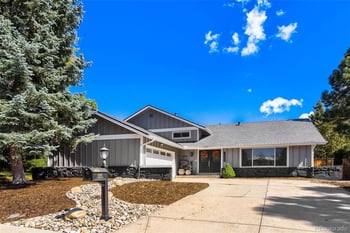
Centennial Homes for Sale & Real Estate Right Now

View More Homes
375 Properties Found
Sort By:

Ask us to build your Colorado home search

I agree to be contacted by The Kenna Real Estate Group via call, email, and text for real estate services. To opt out, you can reply 'stop' at any time or reply 'help' for assistance. You can also click the unsubscribe link in the emails. Message and data rates may apply. Message frequency may vary. For more information, please review our Privacy Policy.
WRITTEN BY
Brian Lee Burke
Brian Lee Burke
Team Leader and Licensed Broker, REALTORĀ® since 2002, Author

Brian Lee Burke is the founder and team leader of Kenna Real Estate Group, a real estate team at Keller Williams DTC. A licensed REALTORĀ® since 2002, Brian helps Colorado buyers and sellers navigate residential real estate, new construction, pricing, and negotiation. He is also the author of The Real Estate Playbook and Mastering Real Estate: Your Guide to Becoming a Top Agent.

View Brian Lee Burke’s full profile.