.jpg)


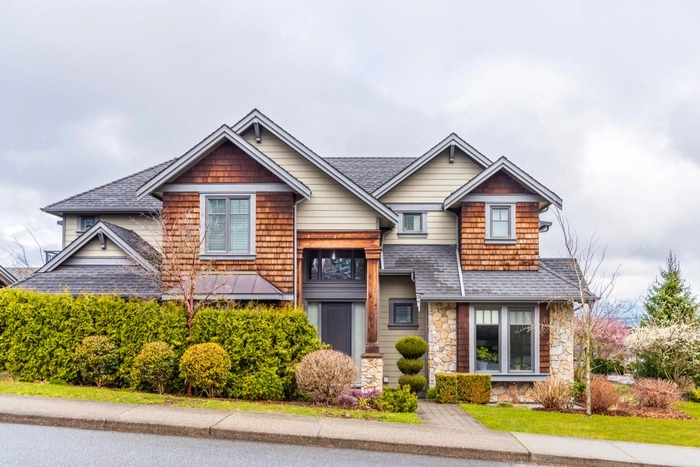
Buying a Colorado home from another state comes down to a checklist: the documents ready before the search, video tours run to a standard, an inspection attended by phone, a remote or mail-away closing, and five Colorado-only checks (radon, sewer, metro districts, hail insurance and the seller's disclosure). This post is the checklist. The decision itself is covered in buying a house in another state before moving: is it a good decision, and the move is covered in why full-service movers make an out-of-state purchase easier.
The Kenna Real Estate Group at Keller Williams DTC closes purchases for buyers who are still in California, Texas, Illinois, Arizona and the East Coast on closing day. Every item below is something the group does on those files.
1. Documents to have ready before the first showing
- Pre-approval from a lender licensed in Colorado. Colorado sellers' agents check the letter. The group works with Mike Oswald, VP of Mortgage Lending at Rate, NMLS 261003, Equal Housing Lender, who prices Front Range loans with Colorado taxes and hail insurance in the payment. You are free to use any lender. The costs are on the Colorado home financing guide.
- Income and asset file: two years of W-2s or tax returns, 30 days of pay stubs, two months of bank statements, and a gift letter for any gifted funds.
- Proof of funds for earnest money and closing: a statement dated within 30 days. Earnest money in Colorado runs 1% to 3% of price, wired to the title company within 3 days of contract.
- Government ID that matches the contract name exactly, for the notary at closing.
- A power of attorney if a spouse or relative will sign; the lender approves the form before closing week, not on closing day.
2. Video tours run to a standard
A ten-second walkthrough on a phone is not a tour. The group's video showing on an out-of-state file covers a fixed list, and the buyer keeps the recording:
- Roof from the street and from the yard, with the age from the listing or the seller's disclosure read on camera. Hail season runs May to September and roof age drives both the insurance quote and the inspection.
- Furnace and water heater data plates up close, to date both units. A furnace at a Front Range elevation works hard for 20 years and is a $5,000 to $9,000 replacement.
- Every faucet run, every window opened, the electrical panel opened.
- The basement and foundation walls, looking for step cracks and bowing from expansive bentonite clay, which is under most of the Denver metro.
- The street at 7:15 a.m. and 5:30 p.m., and the drive to the buyer's workplace on camera on a weekday.
- The nearest park or trail, with the minutes on foot stated on camera.
Start the search on every home for sale in Colorado, and run the listing itself through the Denver home buyer verification checklist before asking for a tour.
3. The Colorado contract deadlines an out-of-state buyer sets
Colorado purchases use the Contract to Buy and Sell Real Estate from the Colorado Real Estate Commission. The buyer picks every deadline. For a remote buyer the group writes them with shipping and time zones built in:
| Deadline | Days from contract | Why it matters from out of state |
|---|---|---|
| Seller's Property Disclosure | 3 to 5 | Colorado's disclosure form lists known defects, roof age, past water intrusion and any special district. Read it before the inspection. |
| Association documents | 7 to 10 | HOA covenants, budget, reserves and any pending special assessment. Terminate inside the deadline if they do not fit. |
| Inspection objection | 7 to 10 | Long enough to get the inspector, sewer scope and radon test scheduled and the reports read. |
| Property insurance termination | 10 to 14 | Time to get a real hail-deductible quote on the actual roof. |
| Appraisal and loan termination | 21 to 28 | Earnest money returns if the appraisal or underwriting fails before these dates. |
| Closing | 30 to 45 | Add 5 days if the closing package ships to another state. |
The making an offer on a Colorado home page explains how each deadline is negotiated.
4. Attend the inspection by phone
Colorado inspections take three to four hours. The buyer does not fly in for it. The group's process on a remote file:
- The inspector calls at the end of the inspection and walks the findings on video, from the roof to the crawlspace.
- The written report, with photos, lands the same day.
- The agent gets contractor bids on anything over $1,000 before the objection deadline, so the objection asks for a real number, not a guess.
Three add-ons the group orders on every Colorado home, all inside the same window:
- Radon test, $150. Colorado sits in the highest EPA radon zone. A result at or above 4 pCi/L brings a mitigation system at $1,000 to $2,500, and sellers routinely pay it. The details are in radon and the Denver home purchase.
- Sewer scope, $150 to $300. Homes built before 1975 across Denver, Aurora, Lakewood and Littleton have clay sewer lines that root and collapse. A replacement runs $8,000 to $20,000, and the scope is the only way to see it.
- Roof inspection by a roofer, free from most roofing companies, when the roof is over 12 years old.
5. Metro districts: the tax bill the listing does not show
Many Colorado subdivisions built after 2000 sit in a metro district, a special taxing district that repays the developer's roads, water lines and parks through extra mills on the property tax bill. The difference is real money: two homes at the same price in Parker or Aurora carry property tax bills $1,500 to $4,000 a year apart because one sits in a district and one does not.
Find it before the offer: the county assessor's record lists every taxing authority on the parcel, and the seller's disclosure has a special district line. Read the district's debt and mill levy history, not just this year's bill. The Denver special district and metro district tax guide shows how to read one.
6. Hail insurance: quote it on the actual roof
Colorado homeowners insurance runs higher than most states because of hail. Three things an out-of-state buyer sees for the first time on a Front Range quote:
- A separate wind and hail deductible, written as 1% to 2% of the dwelling coverage. On a $600,000 dwelling limit that is $6,000 to $12,000 out of pocket on a hail claim.
- Roof age pricing. Insurers rate a 15-year-old asphalt roof far higher than a 5-year-old one, and some pay only depreciated value on older roofs.
- Wildfire zone pricing on foothills homes in Jefferson, Boulder and Douglas counties.
Get the quote inside the property insurance termination deadline, and budget $2,000 to $4,000 a year on a $600,000 home in the Denver metro.
7. Remote notarization and the mail-away closing
Colorado is a title company closing state; no attorney is required. An out-of-state buyer closes one of three ways:
- Remote online notarization. Colorado's notary law permits it, and Colorado notaries register for it with the Secretary of State. The title company sets a video signing, the buyer signs on screen, and the deed records the same day.
- Mail-away. The title company overnights the package to a notary near the buyer; the buyer signs and overnights it back. Build five days into the closing date.
- Power of attorney. A lender-approved specific POA lets a spouse or relative sign in Colorado.
Closing funds go by wire. Confirm the wire instructions by phone using the number on the title company's website, never a number or an account in an email, because wire fraud on Colorado closings targets out-of-state buyers who have never met the title company. The rest of the closing-day process is on what is needed to close on a house in Colorado.
8. Two more Colorado items that surprise remote buyers
- The ILC. Colorado contracts offer an Improvement Location Certificate instead of a full survey. It shows where the house and fences sit relative to the lot lines and costs $300 to $600. On a lot with a fence dispute or an addition, order the full survey; Colorado ILC vs. land survey explains the choice.
- Water on rural lots. Outside city limits, wells run under permits from the Colorado Division of Water Resources, and a domestic well permit limits what the water is used for. A well test and a septic inspection go on the inspection list.
The full pre-offer list is on the buyer's due diligence checklist for Denver real estate. For the first 90 days after the move, use the moving to Denver guide and the Front Range relocation checklist.
Where to go next
- Colorado relocation services
- How the Kenna Real Estate Group helps buyers
- The Colorado home buyer's guide
- Closing costs for Colorado home buyers
- Explore the Denver metro area
- Kenna Real Estate Group agents
Talk to the Kenna Real Estate Group
The Kenna Real Estate Group at Keller Williams DTC runs the whole checklist for out-of-state buyers: recorded video tours, contract deadlines built for shipping and time zones, phone-in inspections with the radon test and sewer scope ordered, and a remote closing with the title company. Call or text 303-955-4220. A live person answers. Not a robot, not a phone tree. Start tonight and search every home for sale in Colorado.