New - 2 Hours Ago

.jpg)


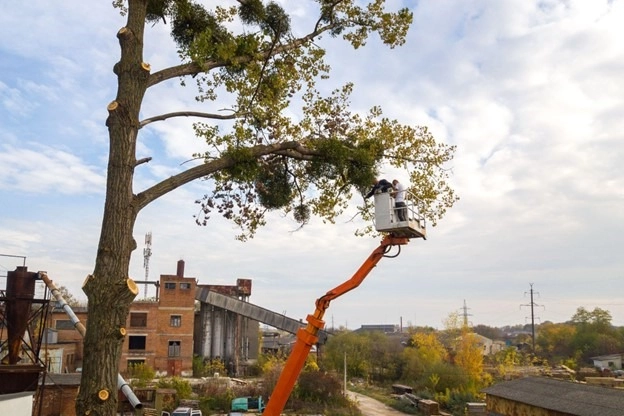
A Front Range tree comes down when it is dead, diseased, storm-damaged, or growing into a foundation, sewer line or power line, and the cost on the Denver metro ranges from a few hundred dollars for a small tree to several thousand for a large, hazardous removal near a house. Colorado's climate, permit rules and HOA covenants all shape that decision differently than they do in a coastal city.
A certified arborist looks for the same warning signs across Denver, Aurora, Lakewood, Littleton and Colorado Springs: large dead branches, a trunk that leans more than it used to, fungus at the base, bark splitting away from the wood, or roots heaving a sidewalk or foundation. Any one of those is a reason to schedule an inspection before the next windstorm or heavy snow turns a slow problem into an emergency.
Front Range winters add two more triggers that homeowners in milder climates rarely see: repeated freeze-thaw cracking in the trunk, and root damage from expansive clay soil that swells when it is wet and shrinks when it dries out.
Denver requires a permit through the Parks and Recreation forestry division to remove or heavily prune a street tree, also called a parkway tree, the one planted in the strip between the sidewalk and the curb. The city plants and manages that strip because the tree sits on public right-of-way even though it fronts a private home. Removing or topping a street tree without that permit is a code violation the city can cite.
A tree on private property behind the sidewalk, in a backyard or side yard, does not need a City and County of Denver removal permit in most cases. Check with Denver's forestry division before cutting anything close to the property line, since the boundary between "your tree" and "the city's tree" is not always where a homeowner assumes it is.
Unincorporated Jefferson, Douglas, Arapahoe and El Paso counties do not require a county permit to remove a tree on private property. Two things still apply everywhere: an HOA's architectural covenants, and, in the foothills wildland-urban interface, defensible-space rules tied to the county's wildfire mitigation program.
Yes. Emerald ash borer was first confirmed in Boulder County in 2013 and has since spread across the Front Range, including parts of Denver, Longmont and Arvada. It kills ash trees within a few years of infestation and has no cure once a tree is heavily infested. Front Range cities have planted a large share of their street trees as ash over the past several decades, which is why so many neighborhoods are now working through staged removals and replacements.
A homeowner with an ash tree should have it inspected. Some trees qualify for preventive trunk injections that protect a healthy tree for two to three years at a time; a tree that already shows thinning canopy, bark splitting or woodpecker damage is past the point where injection helps and needs to come down before it becomes a hazard.
Beyond ash and emerald ash borer, Front Range homeowners watch for pine beetle in ponderosa and lodgepole pine at higher elevations, and for storm breakage in fast-growing, weak-wooded species like Siberian elm and silver maple, both of which split easily in high wind and heavy wet snow. Native and well-adapted species such as bur oak, hackberry, Kentucky coffeetree and Front Range-hardy honeylocust hold up better against wind, hail and drought.
Defensible space is the buffer of thinned, maintained vegetation around a structure that slows or stops an advancing wildfire and gives firefighters room to work. The Colorado State Forest Service lays it out in zones: an immediate zone within 5 feet of the house kept clear of anything flammable, a zone extending to about 30 feet where trees are thinned and spaced, and a further zone out to 100 feet or more on sloped terrain where fuel is reduced but not fully cleared.
Any home in the wildland-urban interface, the foothills west of Golden, Morrison, Evergreen, the hills above Colorado Springs and similar terrain, should have a defensible-space assessment. Jefferson County, Douglas County and El Paso County all run wildfire mitigation programs that can walk a homeowner through what their specific lot needs, and some insurers now require proof of defensible space to renew a policy in these areas.
Many Front Range HOAs and metro districts require architectural review approval before a homeowner removes a significant tree, and some require the homeowner to replace it with a tree that meets a minimum size or species list. Read the covenants before scheduling a crew. A removal done without HOA sign-off can trigger a violation notice even when the tree was clearly dead.
Yes, once it is documented. Hail season on the Front Range runs from spring through September, and a severe storm can strip bark, split limbs and snap tops out of mature trees in minutes. Photograph the damage first, both for the insurance claim and for any HOA notice, then schedule removal. A split or half-fallen tree near a structure, driveway or power line is an emergency and most Front Range tree services offer same-day response for that level of hazard.
Most Colorado homeowners policies cover removal of a tree that falls on a covered structure, such as the house, garage or fence, and many policies include a set dollar limit, $500 to $1,000, toward removing a fallen tree even when it misses the structure but blocks a driveway or damages a walkway. A tree that simply dies of disease or old age without storm involvement is the homeowner's cost, not the insurer's. Check the specific policy language before assuming coverage either way.
| Tree size | Typical Front Range cost | Notes |
|---|---|---|
| Small, under 30 feet | $200 to $800 | Ash, ornamental pear, young maples |
| Medium, 30 to 60 feet | $800 to $1,800 | Most mature Front Range shade trees |
| Large, 60 to 90 feet | $1,500 to $3,500 | Mature cottonwoods, large elms, crane work needed |
| Stump grinding | $150 to $500 per stump | Priced separately from removal |
Trees close to a house, power line or fence cost more because of the extra rigging and care involved, and a tree that has to come down in pieces by crane runs well above these ranges. Get two or three written estimates for anything over a few hundred dollars, and confirm the contractor carries liability insurance before a crew climbs a tree over a roofline.
Late fall through winter, once trees are dormant, is the easiest season for removal on the Front Range: less foliage means better visibility for the crew, the ground is firmer, and the tree carries less weight for a crane or bucket truck to manage. Storm-damaged or hazardous trees do not wait for the ideal season; those come down as soon as conditions allow the crew to work, regardless of month.
Mature, healthy shade trees add measurable curb appeal and shade value in Denver, Aurora, Littleton, Lakewood and Colorado Springs, so removing one that would otherwise have survived is a loss. A dead, diseased or structurally unsound tree is the opposite: leaving it standing is a liability that shows up as a red flag on a buyer's inspection and can slow a sale. The homeowner's Smart Pricing Report from the Kenna Real Estate Group factors tree canopy, yard condition and curb appeal into a Colorado pricing strategy, and the guide to adding value before selling covers which yard and landscape projects are worth doing before listing.
Species that handle Colorado's semi-arid climate, hail, wind and clay soil hold up best: bur oak, Kentucky coffeetree, hackberry, hardy hybrid elms bred for disease resistance, and native conifers such as ponderosa pine at higher elevations. Avoid replanting fast, weak-wooded species in a spot that already proved hard on the last tree. A newly planted tree needs deep, infrequent watering through its first two to three growing seasons, since the Front Range's short growing season and late frosts make establishment slower than in milder climates.
Colorado's standard seller disclosure form asks about known defects on the property, and a hazardous tree, an unresolved HOA violation tied to a removal, or a stump that still needs grinding before closing are the kind of items that belong on that form. A buyer's inspector will note a dead or leaning tree near the house, and it can become a point raised during the inspection objection period the purchase contract sets. Handling it before listing avoids a late-stage negotiation.
The Kenna Real Estate Group helps Front Range sellers decide which yard and tree work is worth doing before listing, and helps buyers read a property's landscape, defensible space and HOA obligations before they write an offer. Call or text 303-955-4220. A live person answers. Not a robot, not a phone tree. Ready to look at homes instead? search every home for sale in Colorado.
Questions about any home in Colorado? Call or text 303-955-4220. A live person answers.
Only for a street tree in the public right-of-way between the sidewalk and curb, managed through Denver Parks and Recreation forestry. A tree on private property behind the sidewalk does not need a city removal permit in most cases.
Yes. It has spread across the Front Range since first being found in Boulder County in 2013 and kills ash trees within a few years of infestation. Healthy ash trees can sometimes be saved with preventive trunk injections.
A large mature tree, 60 to 90 feet tall, runs $1,500 to $3,500 depending on access, proximity to structures and whether a crane is needed. Stump grinding is priced separately at $150 to $500.
Many Front Range HOAs and metro districts require architectural review approval before a significant tree comes down, and some require a replacement tree of a certain size or species. Check the covenants first.
Defensible space is a maintained buffer around a home that slows an advancing wildfire. Homes in the foothills wildland-urban interface, such as areas near Golden, Morrison and Evergreen, should have it assessed through the county wildfire mitigation program.
Most Colorado policies cover removing a tree that falls on a covered structure and include a smaller set allowance for a fallen tree that blocks a driveway without hitting the house. A tree that dies of disease without storm involvement is the homeowner's cost.
Late fall through winter, while the tree is dormant, is easiest for the crew and the tree. Storm-damaged or hazardous trees are removed as soon as conditions allow, regardless of season.
Removing a healthy, mature shade tree can reduce curb appeal, but leaving a dead or hazardous one standing is worse, since it shows up on a buyer's inspection. A Smart Pricing Report from the Kenna Real Estate Group weighs yard condition into pricing strategy.


