.jpg)


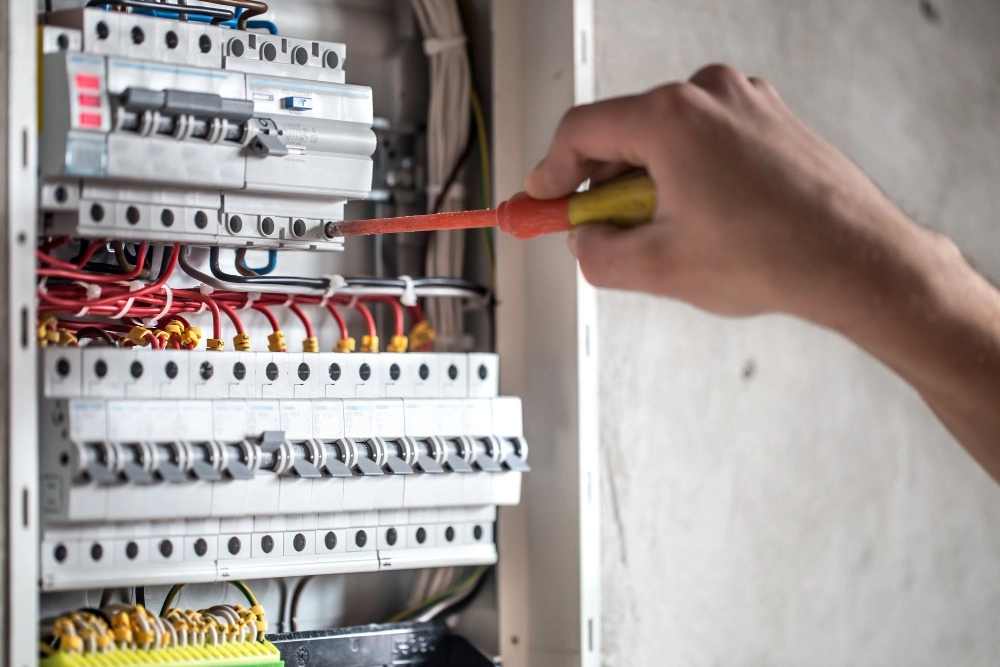
There are electrical power points in practically all contemporary homes, often known as generic or socket outlets.
Each kind has distinctive qualities and advantages. Therefore, choosing the proper outlet may protect you from electrical risks and improve your home's energy efficiency.
In this post, we'll look at a few of the electrical outlets and receptacles that often help homes and workplaces.
Types Of Electrical Power Points
Metals like brass and nickel, various colors, and wood treatments are available for electrical outlets and outlet covers.
Electrical outlets come in various shapes and sizes to accommodate the needs of your appliances, power tools, and devices and bring down energy consumption at your home.
Ready to find your dream home in Colorado?
Let us help you. Call or Text Kenna Real Estate Group at 303-955-4220 to get personalized assistance from our expert real estate agents. Find out what your home is worth in today's market.
Keep reading to know the most important types—
15A Power Points
For locations with appliances requiring this kind of power, 15-amp power outlets are excellent. Since they are qualified and obligated by law to do so, electricians will be the ones to install the power points.
15 amp appliances and 10 amp plugs can fit in 15 amp outlets. However, the reverse is different from the other way around. Instead, through a hole in the wall, electrical lines are supplied to the spot where the 15 amp gets placed.
A metal clamp holds the wires together with enough protrusion to allow an appropriate outlet connection.
Remember, all power outlets, including 15 amp outlets, must be installed by licensed and fully certified emergency electricians at Livesg.com.au or other certified sparkies.
Ready to find your dream home in Colorado?
Let us help you. Call or Text Kenna Real Estate Group at 303-955-4220 to get personalized assistance from our expert real estate agents. Find out what your home is worth in today's market.
GFCI
Electrocution can be prevented with a ground fault circuit interrupter (GFCI). GFCIs are installed everywhere electrical circuits can accidentally come into contact with water.
An outdoor portable GFCI should be utilized with various electrical power tools (such as drills, mowers, and trimmers) and checked before each use. It may be difficult to stop a small amount of leakage current in several standard circuits.
For instance, a few stationary motors, such as bathroom vent fans or fluorescent light bulbs, may create enough leakage to cause unintended tripping. A GFCI also trips with just five mA (0.005 A) of leakage current from the hot wire to the ground.
AFCI
Arc fault circuit interrupters are made to stop fires from being started by electrical wire faults that arc. A continuous lighting discharge of electricity over an insulating material is known as an arc, typically accompanied by partial electrode volatilization. In rare circumstances, the first arc could start ignition before the AFCI interrupts the detecting gate. Arc-fault circuit Interrupters (ARCI) distinguish between desired and undesirable arcing circumstances using detecting circuitry. If you're looking for expert installation of AFCI systems in your home, Jolt Electric & HVAC offers top-notch services to ensure your safety and prevent electrical fires.
In rare circumstances, the first arc could start ignition before the AFCI interrupts the detecting gate. Arc-fault circuit Interrupters (ARCI) distinguish between desired and undesirable arcing circumstances using detecting circuitry.
Ready to find your dream home in Colorado?
Let us help you. Call or Text Kenna Real Estate Group at 303-955-4220 to get personalized assistance from our expert real estate agents. Find out what your home is worth in today's market.
The AFCI's control circuitry trips the internal contacts when an undesirable condition is identified, de-energizing the circuit and lessening the likelihood that a fire will start. Therefore, the traditional circuit breaker is not required for the AFCI electronics to operate.
Tamper-Resistant Receptacle
A long-lasting remedy for infantile shock brought on by tampering with electrical outlets is the Thera-Tran receptacle (TRR).
TRRs include built-in safety shutters that prevent the insertion of extraneous items into the receptacle. Only when a grounded or two-bladed plug is introduced do the shutters open. Since 2008, the National Electrical Code has mandated their use.
You can feel the internal shutter system activating when you plug into a TRR.
Carefully straighten the blades of a plug if they are twisted or spread. Never use a pin with creases or cracks on the edges in any outlet. GFCIs, AFCIs, and TRRs are necessary for every newly renovated home.
Ready to find your dream home in Colorado?
Let us help you. Call or Text Kenna Real Estate Group at 303-955-4220 to get personalized assistance from our expert real estate agents. Find out what your home is worth in today's market.
The Importance Of An Electrical Wiring
Many of your appliances are plugged into electrical outlets as their source of electricity. Most homes have a mix of 120-volt circuits rated at 15 and 20 amps. Wiring runs from a circuit breaker to each of your outlets.
A 4-prong cord is automatically provided when you buy a new appliance from The Home Depot without having it professionally installed. It is known as a circuit breaker because it "breaks" a circuit if the electric current is too strong.
Electrical lines known as dedicated circuits transport electricity to a single outlet. They are advised for essential appliances to ensure sufficient electricity for operation.